

Skip to main content Home | Contact Us | Find Us | Français | Asian Banking | Site MapCIBC Websites
Personal Banking Business Services About CIBC
 
Inside CIBC
CIBC Timeline

CIBC Timeline

1867-1895 | 1896-1930 | 1931-1960 | 1961-1986 | 1987-2008

Consolidation & Expansion, 1896-1930

The discovery of gold in the Yukon in 1896 marked the beginning of a grand adventure for The Canadian Bank of Commerce. As prospectors flooded Dawson City, the Dominion Government asked the bank to open a branch in the burgeoning town. Two groups of specially trained bank employees set out from Toronto in April 1898 to make the arduous journey to Dawson. They arrived nearly 2 months later, having travelled by steamer, dog team and canoe. The first few years of banking in the Yukon remain the stuff of legend. Poet and former Commerce employee, Robert Service, epitomized them in "Songs of a Sourdough".

 
Camp at Lake Bennett, May 1898

With the turn of the century, The Canadian Bank of Commerce continued to seek out new opportunities for growth. Through amalgamations with strong regional banks, it extended its presence from coast to coast. Further acquisitions in the 1920s gave The Commerce one of the strongest branch networks in Canada with well over 700 locations by 1929. Nevertheless, the bank sought opportunities internationally. Seeing considerable trade possibilities with the Caribbean, the bank opened branches in Cuba, Jamaica, Barbados and Trinidad during the 1920s. The Commerce became firmly entrenched in the West Indies, and CIBC maintains a strong presence there through its joint venture with Barclays Bank: FirstCaribbean International Bank.


James Henry Gundy
 

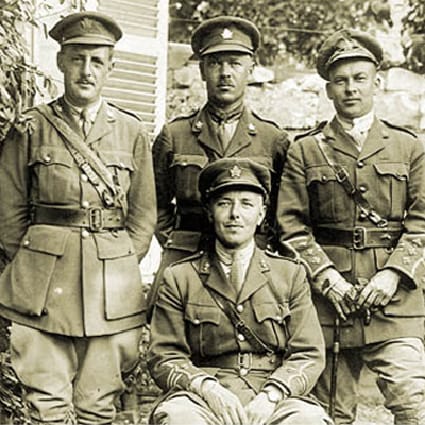
These years were also important in the establishment and growth of the investment industry in Canada. Wood, Gundy & Company, the precursor of CIBC's investment banking arm, opened its doors on February 1, 1905 at the corner of King and Yonge streets in Toronto. Formed by George Herbert Wood and James Henry Gundy, the firm initially specialized in underwriting and distributing municipal and provincial bonds. At a time when Canada was a country of savers, not investors, Wood and Gundy were pioneers in the investment business. During World War I, they took a prominent and active role in the organization of Victory Loans - a war financing measure that saw ordinary Canadians investing their savings for the first time. Sold by banks, insurance companies and investment dealers, Victory Loans not only raised $1.7 billion for the Canadian war effort, but they also whetted the Canadian appetite for bonds.